Explore common AC Repair topics in Stockton, CA, including emergency air conditioning service, central air repair, ductless mini-split repair, thermostat troubleshooting, refrigerant leak detection, compressor repair, condenser repair, evaporator coil service, and seasonal AC maintenance. These guides are designed to help homeowners understand common problems, repair options, and when professional help may be needed.
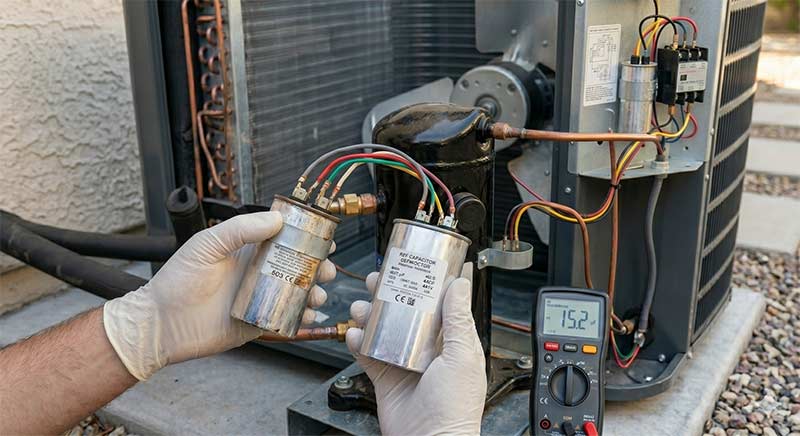 AC Capacitor Replacement
 The capacitor plays an important role in helping your air conditioning system start and run properly. When a capacitor begins to fail, you may notice your AC struggling to start, shutting off unexpectedly, or failing to cool your home efficiently.
Capacitor problems are among the more common AC issues and are often repairable without major system work. Identifying a failing capacitor early may help prevent additional strain on other components and restore reliable cooling performance.
The compressor plays a critical role in the cooling process by circulating refrigerant through the air conditioning system. When a compressor begins to fail, homeowners may notice loud noises, weak cooling performance, warm air, hard starting, or systems that repeatedly trip breakers. Compressor problems can sometimes be caused by electrical issues, overheating, refrigerant imbalances, or general wear over time. Identifying compressor issues early may help prevent complete system failure and, in some cases, reduce the likelihood of needing a full AC replacement.
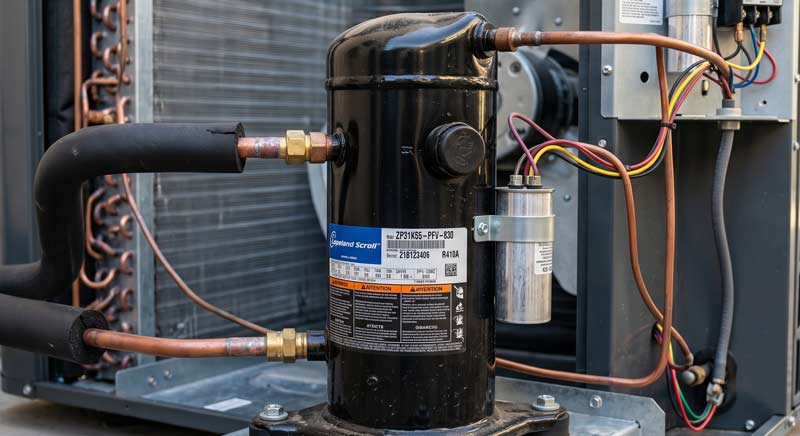 Compressor Repair
 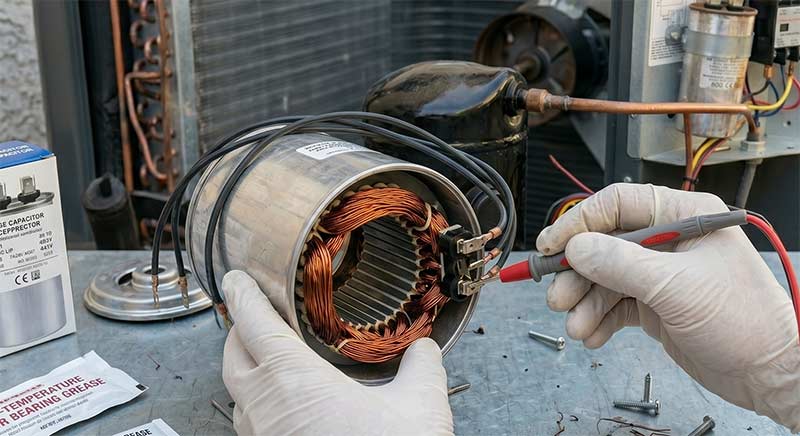 AC Fan Motor Repair
 Your air conditioner’s fan motor is responsible for moving air through the system and helping transfer heat away from your home. A failing fan motor can lead to reduced airflow, poor cooling performance, unusual noises, or even system shutdowns. Fan motor problems may be caused by worn bearings, electrical issues, failing capacitors, or general wear over time. Understanding the source of the problem can help determine whether repair or replacement is the better option.
Low refrigerant levels can reduce cooling performance and place additional strain on an air conditioning system. In many cases, refrigerant does not simply “run low” on its own — it leaks from the system through damaged coils, fittings, or connections. Signs of a refrigerant leak may include warm air from vents, ice buildup on the system, hissing sounds, longer cooling cycles, or rising energy costs. Refrigerant leak detection involves identifying the source of the leak, repairing the damaged area, and restoring refrigerant levels to manufacturer specifications so the system can operate properly again.
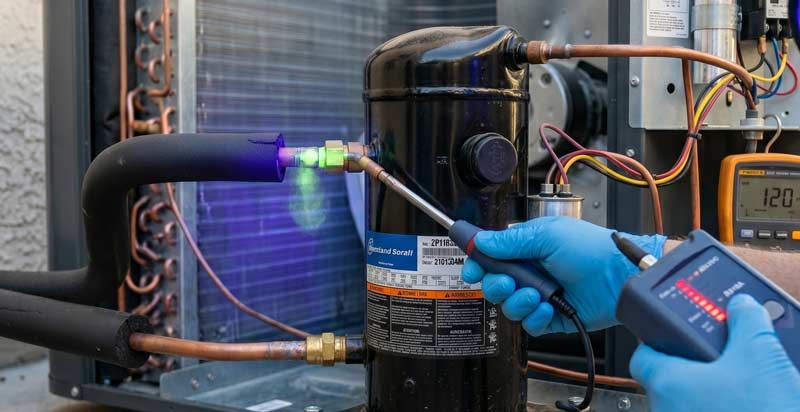 Refrigerant Leak Detection
  AC Tune-Ups
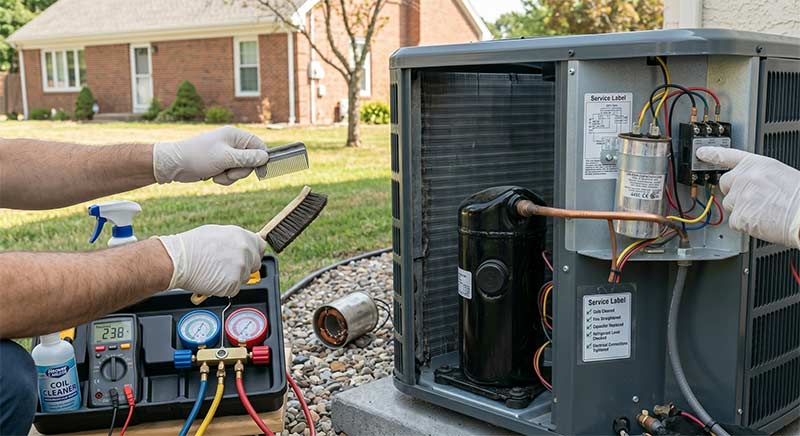
 Routine AC tune-ups are one of the best ways to maintain system performance and reduce the likelihood of unexpected breakdowns. A typical tune-up includes inspecting key components, cleaning critical parts, checking refrigerant levels, and looking for signs of wear before they become larger problems. Regular maintenance can improve energy efficiency, extend equipment lifespan, and help ensure your air conditioner performs reliably during peak cooling season.
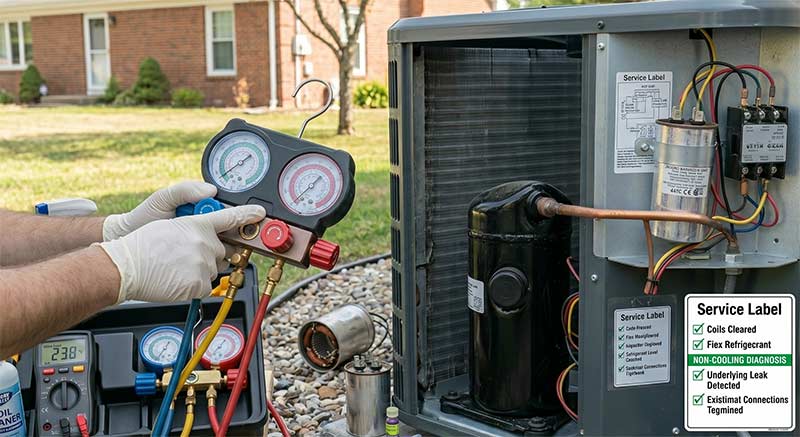
If your air conditioner is running but not producing cool air, several different issues could be responsible. Problems with refrigerant levels, airflow restrictions, electrical components, thermostats, or mechanical failures can all affect cooling performance. Diagnosing the issue usually involves narrowing down which component or system is causing the cooling failure. Identifying the underlying cause can help determine the most effective path toward restoring proper cooling.
 AC Not Cooling
  Emergency AC Repair
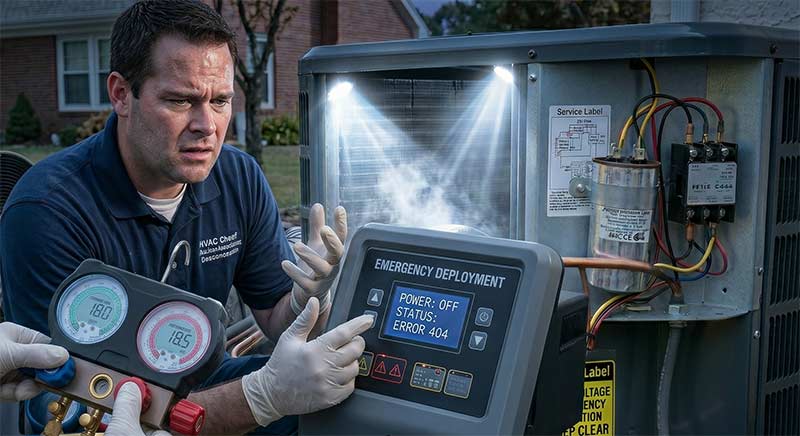
 Air conditioning problems do not always happen during normal business hours. When a system fails during extreme heat, prompt attention may be necessary to protect comfort and safety. Emergency AC repair typically focuses on diagnosing urgent cooling failures, addressing critical system issues, and restoring cooling as quickly as possible during high-temperature conditions.
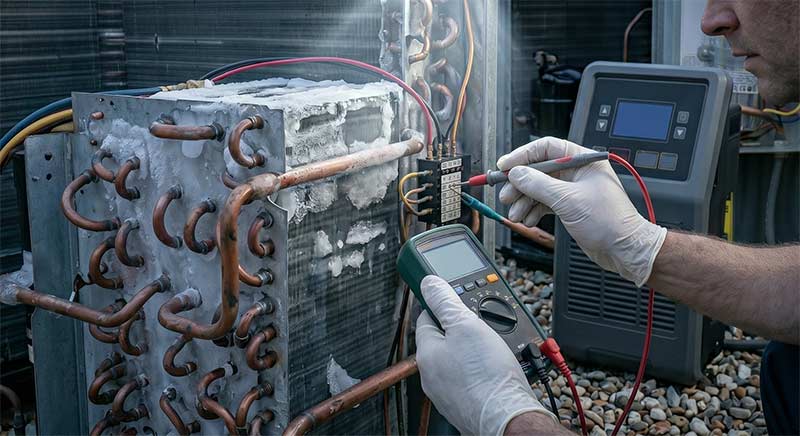
A frozen evaporator coil is often a sign that something else within the system is not functioning properly. Restricted airflow, refrigerant issues, dirty filters, or mechanical problems can all contribute to ice buildup on the coil. Simply thawing the ice rarely solves the underlying issue. Identifying the root cause is usually necessary to restore proper airflow and cooling performance while reducing the risk of future freeze-ups and system damage.
 Frozen AC Coil Repair
 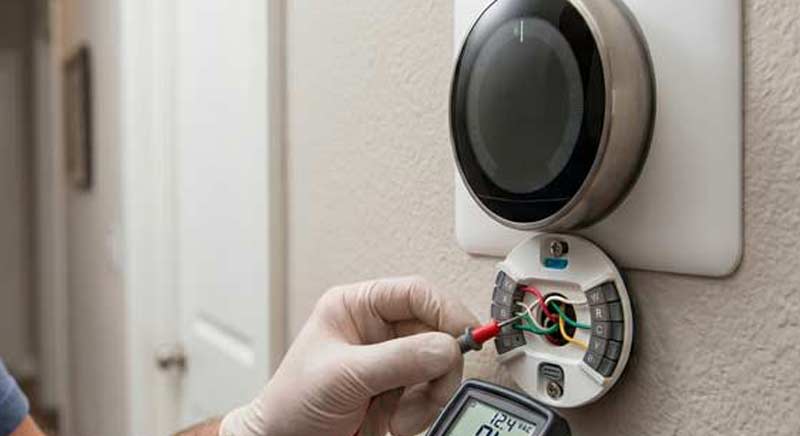 Thermostat Troubleshooting
 A malfunctioning thermostat can cause an air conditioning system to behave unpredictably or stop working entirely. If your AC will not turn on, runs constantly, cycles too often, or fails to maintain the temperature you selected, the thermostat may be part of the problem. Troubleshooting may involve checking wiring connections, batteries, programming settings, sensors, calibration, or communication with the HVAC system itself. Whether you have a traditional programmable thermostat or a newer smart thermostat, identifying the issue early can help restore proper cooling and improve system efficiency.